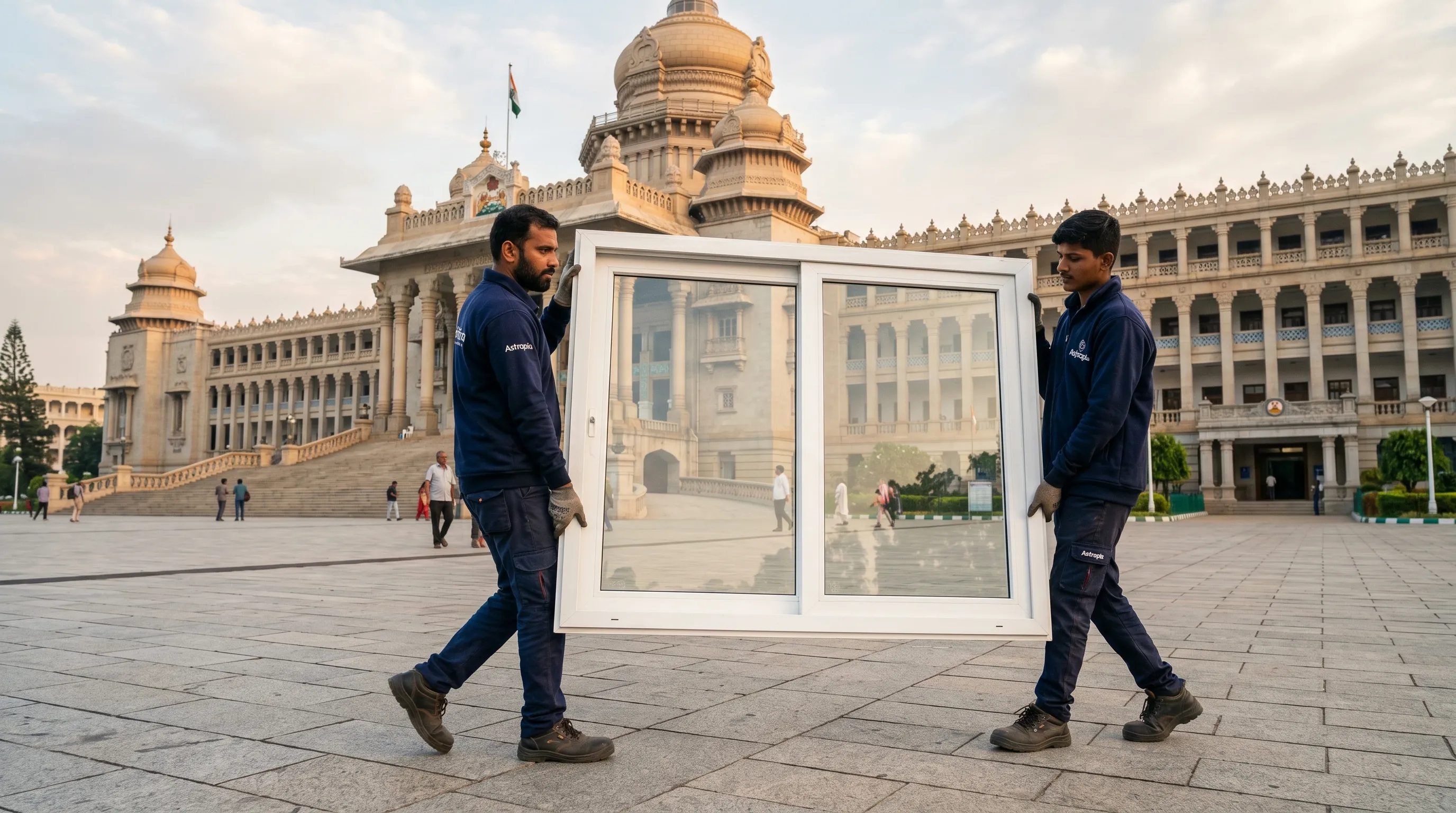
Fixed Windows in Bengaluru: uPVC vs. Wood vs. Aluminium for 2026

Choosing the right fixed windows for your Bengaluru home in 2026 is crucial. Discover why uPVC stands out against traditional wood and modern aluminium.

As Bengaluru continues its rapid growth into 2026, homeowners, architects, and builders face a critical decision when selecting windows: which material truly offers the best balance of aesthetics, performance, and longevity? Fixed windows, chosen for their ability to bring in abundant natural light and offer expansive views without the need for opening, are a popular choice across the city's dynamic localities from Whitefield to Koramangala. However, the unique challenges of Bengaluru's climate—heavy monsoons, pervasive construction dust, and high ambient traffic noise in areas like Sarjapur Road and HSR Layout—demand a window solution that goes beyond mere appearance. This comprehensive guide will meticulously compare the three primary materials dominating the market: traditional wood, sleek aluminium, and advanced uPVC, helping you make an informed choice for your property's future.

Why Fixed Windows Matter for Bengaluru Homes in 2026

Fixed windows are non-operable units designed to maximize natural light and offer unobstructed views. They are ideal for spaces where ventilation is not a primary concern but light and visual connectivity are paramount. In Bengaluru's modern architectural landscape, these windows are frequently specified for living rooms, large hallways, stairwells, and offices, creating bright, open environments. The beauty of a well-placed Fixed Window is undeniable. They are perfect for framing the city's green canopy or integrating seamlessly into contemporary designs. However, their static nature means that their sealing, insulation, and material durability become even more critical, as there are no moving parts to periodically adjust or maintain in the same way as an operable window. For areas like Indiranagar or BTM Layout, where maximizing natural light without compromising on sound or weather protection is key, the material choice for fixed windows is paramount.

The Contenders: A Deep Dive into Materials

uPVC: The Modern Advantage

Unplasticized Polyvinyl Chloride (uPVC) has emerged as a frontrunner in the Indian window market, especially in demanding climates like Bengaluru's. Manufactured using advanced extrusion processes, uPVC profiles are inherently robust and designed for superior performance. Astrapia, an ISO-certified manufacturer established in Bengaluru in 2010, produces CIPET-certified uPVC profiles that are specifically engineered to withstand local conditions. Its multi-chambered construction provides excellent thermal insulation, while its non-corrosive nature ensures long-term durability. uPVC is often the material of choice for those seeking a modern, low-maintenance, and high-performance solution for their homes or commercial spaces in bustling areas like Marathahalli and Bellandur.

Wood: Timeless Appeal, Modern Challenges

Wood has been the traditional window material for centuries, prized for its natural aesthetics, warmth, and classic appeal. It offers a unique connection to nature and can be stained or painted to match various interior designs. However, wood comes with significant challenges, particularly in a tropical climate like Bengaluru. It is susceptible to warping, rotting, and termite infestation due to humidity and moisture. Regular maintenance, including painting, varnishing, and repair, is crucial and can be costly and time-consuming. While some homeowners might prefer wood for heritage properties or specific aesthetic reasons, its long-term viability and performance in the face of Bengaluru's heavy monsoons and insect activity often fall short compared to modern alternatives.

Aluminium: Sleek and Contemporary

Aluminium windows offer a sleek, contemporary look with slim sightlines that appeal to modern architectural sensibilities. They are lightweight, strong, and corrosion-resistant, making them a popular choice for large glass installations and commercial buildings. In terms of strength-to-weight ratio, aluminium excels, allowing for slender frames that maximize glass area. However, aluminium is a highly conductive material, meaning it readily transfers heat and cold. This can lead to significant energy losses and condensation issues, especially in Bengaluru's varying temperatures. While anodizing or powder coating can enhance its durability and appearance, the inherent thermal conductivity remains a significant drawback for energy-efficient homes.

Performance Showdown: uPVC vs. Wood vs. Aluminium

Weather Resistance: Battling Bengaluru's Monsoon

Bengaluru's heavy monsoon season, characterized by torrential downpours and high humidity, puts immense pressure on window systems.

  • uPVC: Inherently water-resistant and non-porous, uPVC profiles do not absorb moisture, eliminating issues like warping, rotting, or swelling. When combined with advanced multi-point locking systems and high-quality TPE gaskets, uPVC windows create an impermeable barrier against rain and humidity. This makes them exceptionally well-suited for all localities, ensuring your interiors remain dry and protected.
  • Wood: Highly susceptible to moisture, wood can swell, warp, and rot over time, leading to compromised seals and water ingress. Regular sealing and maintenance are essential but often insufficient to prevent long-term damage in a persistently wet climate.
  • Aluminium: While aluminium itself is corrosion-resistant, its frames can allow water seepage if not meticulously designed and installed. The thermal bridging effect can also lead to condensation on the interior side, which can cause damage to surrounding walls and finishes over time.

Sound Insulation: Quieting the IT Corridor Buzz

The bustling IT corridors and rapidly developing areas like Whitefield, Sarjapur Road, and Bellandur mean that noise pollution is a significant concern for many Bengaluru residents. Effective sound insulation is no longer a luxury but a necessity.

  • uPVC: The multi-chambered design of uPVC profiles, combined with the superior sealing properties of TPE gaskets and the option for double or triple glazing, makes uPVC exceptionally effective at attenuating sound. Astrapia uPVC windows can significantly reduce external noise levels, providing a tranquil indoor environment even in the busiest parts of Koramangala or HSR Layout.
  • Wood: Wood offers some natural sound dampening properties, but its effectiveness is often limited by its inherent porosity and the challenges of achieving truly airtight seals, especially as the material ages and potentially warps.
  • Aluminium: Being a dense, conductive material, aluminium frames can transmit sound vibrations more readily than uPVC. While double glazing improves performance, the frame material itself contributes less to sound insulation compared to uPVC.

Dust & Air Leakage: A Breath of Fresh Air

Construction dust, vehicle emissions, and general urban grime are constant challenges in Bengaluru. Preventing their ingress is crucial for indoor air quality and cleanliness.

  • uPVC: The precision engineering of uPVC profiles, coupled with robust multi-point locking mechanisms and the efficacy of TPE gaskets, ensures an exceptionally tight seal. This minimizes dust penetration and air leakage, maintaining cleaner interiors and reducing the burden on air conditioning systems.
  • Wood: As wood ages and expands/contracts, gaps can form, making it prone to dust and air leakage. Maintaining a tight seal over the years is a continuous struggle.
  • Aluminium: While modern aluminium windows can achieve decent seals, the thermal expansion and contraction of the metal can, over time, affect the integrity of the seals, potentially leading to minor air and dust ingress.

Maintenance & Longevity: A Long-Term View

Investing in windows is a long-term commitment. Low maintenance and extended lifespan contribute significantly to overall value.

  • uPVC: Virtually maintenance-free. uPVC does not corrode, rot, peel, or fade. A simple wipe-down with soap and water is usually sufficient to keep them looking new for decades. Their inherent resistance to termites and other pests means no need for chemical treatments.
  • Wood: Requires significant ongoing maintenance, including regular painting, varnishing, sanding, and treating for pests. This adds considerable cost and effort over the lifespan of the windows.
  • Aluminium: Generally low maintenance, requiring occasional cleaning. However, scratches or dents in the powder coating can be difficult to repair and may lead to corrosion if the underlying metal is exposed.

Energy Efficiency: Keeping Cool, Saving Costs

With rising energy costs and a growing emphasis on sustainable living, the energy efficiency of windows is a key consideration.

  • uPVC: The multi-chambered structure of uPVC profiles acts as an excellent thermal barrier, minimizing heat transfer. This significantly reduces the need for air conditioning in summer and heating in cooler months, leading to substantial energy savings. Astrapia's CIPET-certified profiles ensure optimal thermal performance, contributing to lower electricity bills for homes in all Bengaluru areas.
  • Wood: Wood is a natural insulator and offers decent thermal performance when well-maintained and sealed. However, any degradation of the frame or seals due to weather exposure can quickly compromise its insulating capabilities.
  • Aluminium: As a highly conductive material, standard aluminium frames are poor insulators, allowing significant heat transfer. While 'thermal break' aluminium profiles exist to mitigate this, they are often more expensive and still may not match the thermal performance of high-quality uPVC.

Security & Durability: Protecting Your Investment

The security of your home or business is paramount. Windows play a crucial role in preventing unauthorized access.

  • uPVC: uPVC frames are reinforced with galvanized steel, providing exceptional structural strength. When combined with multi-point locking systems and robust hardware, they offer superior security against forced entry. Astrapia's commitment to quality ensures that our all uPVC products are built to last and protect.
  • Wood: The security of wooden windows largely depends on the type of wood, frame thickness, and hardware. While strong woods can be secure, they can be susceptible to rotting or weakening over time, compromising their integrity.
  • Aluminium: Aluminium is inherently strong and, with appropriate hardware, can offer good security. However, thinner, low-grade aluminium frames can sometimes be less robust than well-engineered uPVC or reinforced wood.

Why Astrapia uPVC Fixed Windows are Bengaluru's Choice

For homeowners, architects, and builders in Bengaluru seeking the optimal solution for Fixed Windows in 2026, Astrapia offers an unmatched proposition. As a company established in Bengaluru in 2010, we understand the local climate and architectural demands intimately. Our uPVC profiles are not just manufactured in India; they are engineered for India. We are proud to be ISO 9001:2015, ISO 14001, and ISO 45001 certified, ensuring consistent quality, environmental responsibility, and occupational health and safety standards. Our CIPET certification further attests to the superior material quality and structural integrity of our profiles. We exclusively use advanced TPE gaskets for exceptional sealing against dust, water, and noise, a critical feature for properties in high-traffic zones like Marathahalli, Bellandur, and Whitefield. Choosing Astrapia means investing in a product that combines cutting-edge technology with local expertise, providing superior aesthetics, performance, and peace of mind for decades.

Making Your Decision: A 2026 Perspective

Looking ahead to 2026, the choice for fixed windows in Bengaluru is clear. While wood offers traditional charm and aluminium provides a modern aesthetic, neither can consistently match the all-round performance, low maintenance, and energy efficiency of uPVC, especially when considering Bengaluru's specific environmental challenges. From resisting the heavy monsoons to providing a serene, dust-free interior amidst the city's vibrant buzz, uPVC fixed windows offer a practical, durable, and cost-effective solution. They represent a smart, forward-thinking investment for any property in localities from Sarjapur Road to Koramangala, ensuring comfort, security, and sustained value.

When considering your next window installation or renovation project in Bengaluru, evaluate your options not just on initial cost, but on long-term value, performance, and suitability for our unique climate. For a detailed consultation on how Astrapia's premium uPVC fixed windows can enhance your property, connect with our experts. Discover the difference quality makes and explore bespoke solutions for uPVC in Bengaluru that are built to last.

Premium uPVC, measured and fitted right.

Book a measurement or track an existing order — both take less than a minute.