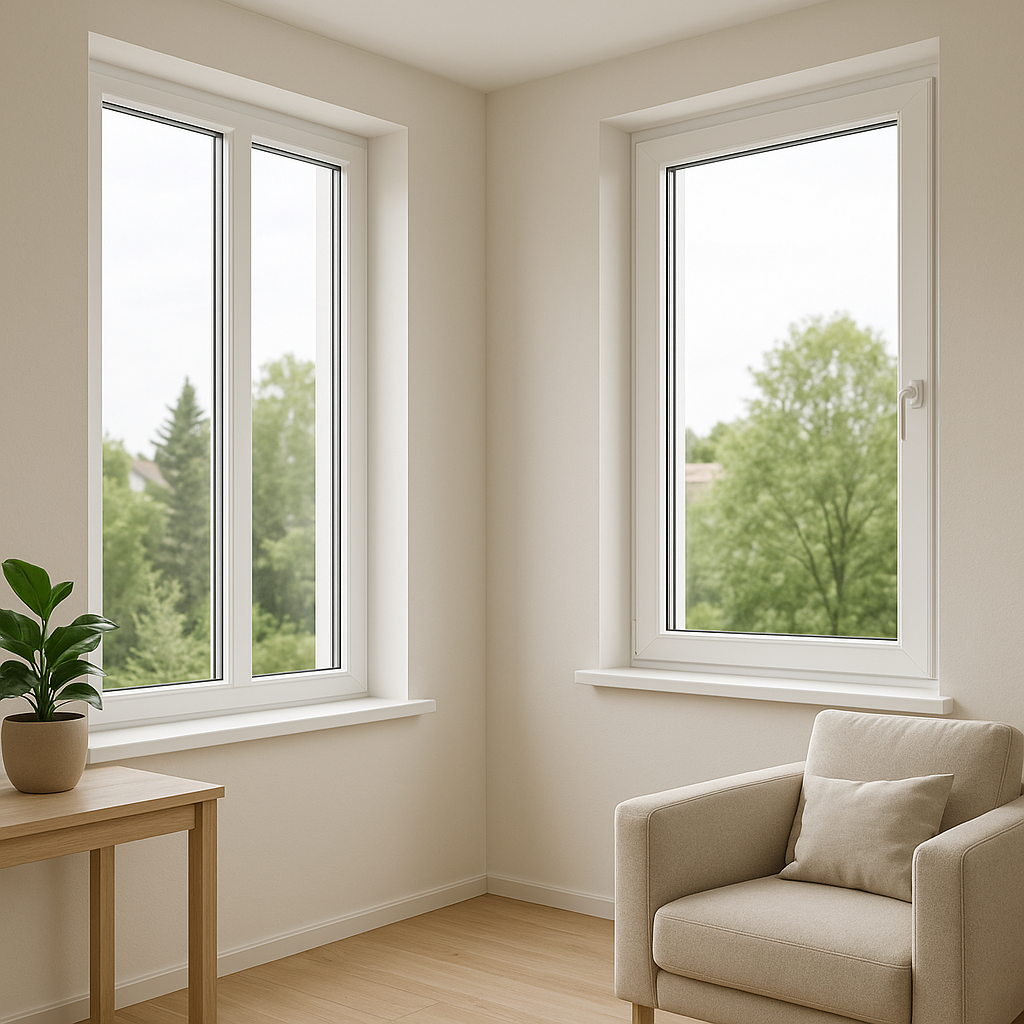
uPVC stands for Unplasticized Polyvinyl Chloride, a rigid and highly durable version of PVC widely used in modern construction. Unlike regular PVC, it contains no plasticizers, which makes it stronger, more stable, and ideal for long-lasting window and door frames. uPVC does not rot, rust, peel, or warp — even under harsh weather — making it one of the most reliable materials for Indian homes.
Premium uPVC used by brands like Astrapia is engineered to withstand heat, rain, noise, dust, and humidity while delivering excellent insulation and long-term performance.
Advantages of uPVC for Windows & Doors
1. Highly Durable & Weather-Resistant
uPVC withstands heavy rain, harsh sunlight, pollution, humidity, and coastal air. It does not rust, corrode, rot, swell, or fade — ensuring long life with minimal maintenance.
2. Excellent Thermal Insulation
uPVC frames are multi-chambered, slowing heat transfer and helping keep indoor spaces cooler. When combined with double glazing, uPVC can reduce electricity bills by lowering AC usage.
3. Low Maintenance
No painting, polishing, or varnishing required. A simple wipe with soapy water keeps the frames looking new for years.
4. Superior Sound Insulation
uPVC frames have tight seals and multi-layered structures that significantly reduce outside noise — ideal for homes near roads, airports, schools, or busy neighborhoods.
5. Aesthetic Variety
Available in multiple colors, textures, and even wood-grain finishes. uPVC pairs well with modern and traditional home styles.
6. Cost-Effective
uPVC windows and doors are typically more budget-friendly than wood or aluminum, while offering superior insulation and longevity — making them great value for money.
7. Eco-Friendly
uPVC is recyclable, long-lasting, and contains no harmful chemicals, making it a sustainable choice for modern construction.
Common Applications of uPVC
- Sliding windows and doors
- Casement and top-hung windows
- French and villa doors
- Tilt & turn windows
- Fixed windows and glass partitions
- Conservatories, sunrooms, and balcony enclosures
- Plumbing pipes, conduit pipes, and cladding (outside the window industry)
uPVC’s strength, weather resistance, and versatility make it suitable for residential, commercial, and high-rise buildings.
uPVC vs Wood vs Aluminium
uPVC vs Wood
- Wood looks premium but requires regular polishing or painting.
- Wood can warp, swell, rot, or attract termites.
- uPVC provides a similar aesthetic (wood finish options) but with zero maintenance and much higher durability.
uPVC vs Aluminium
- Aluminium is strong and sleek but conducts heat easily unless it has a thermal break.
- uPVC insulates better, reduces energy loss, and offers a quieter indoor environment.
- uPVC is usually more affordable while maintaining long lifespan and comfort.
Why uPVC is Perfect for Indian Homes
India’s climate — hot summers, heavy monsoons, dust, traffic noise, and humidity — makes uPVC the ideal choice. Key benefits include:
- Reduces heat and lowers AC bills
- Blocks dust and pollution
- Resists monsoon moisture and corrosion
- Reduces outside noise
- Compatible with coastal regions
- Zero termite issues
- Long-lasting color stability
For homeowners wanting comfort, energy efficiency, safety, and long-term durability, uPVC is the most sensible choice today.
Conclusion
uPVC is a modern, high-performance material that provides strength, energy efficiency, noise reduction, weather resistance, and low maintenance — everything today’s homeowners demand. Whether you’re building a new home or upgrading your existing windows, uPVC offers unmatched long-term value.
Astrapia specializes in premium uPVC windows and doors engineered for Indian conditions.
If you want long-lasting, stylish, and high-performance windows for your home, explore Astrapia’s full product range or contact our team for a consultation.