
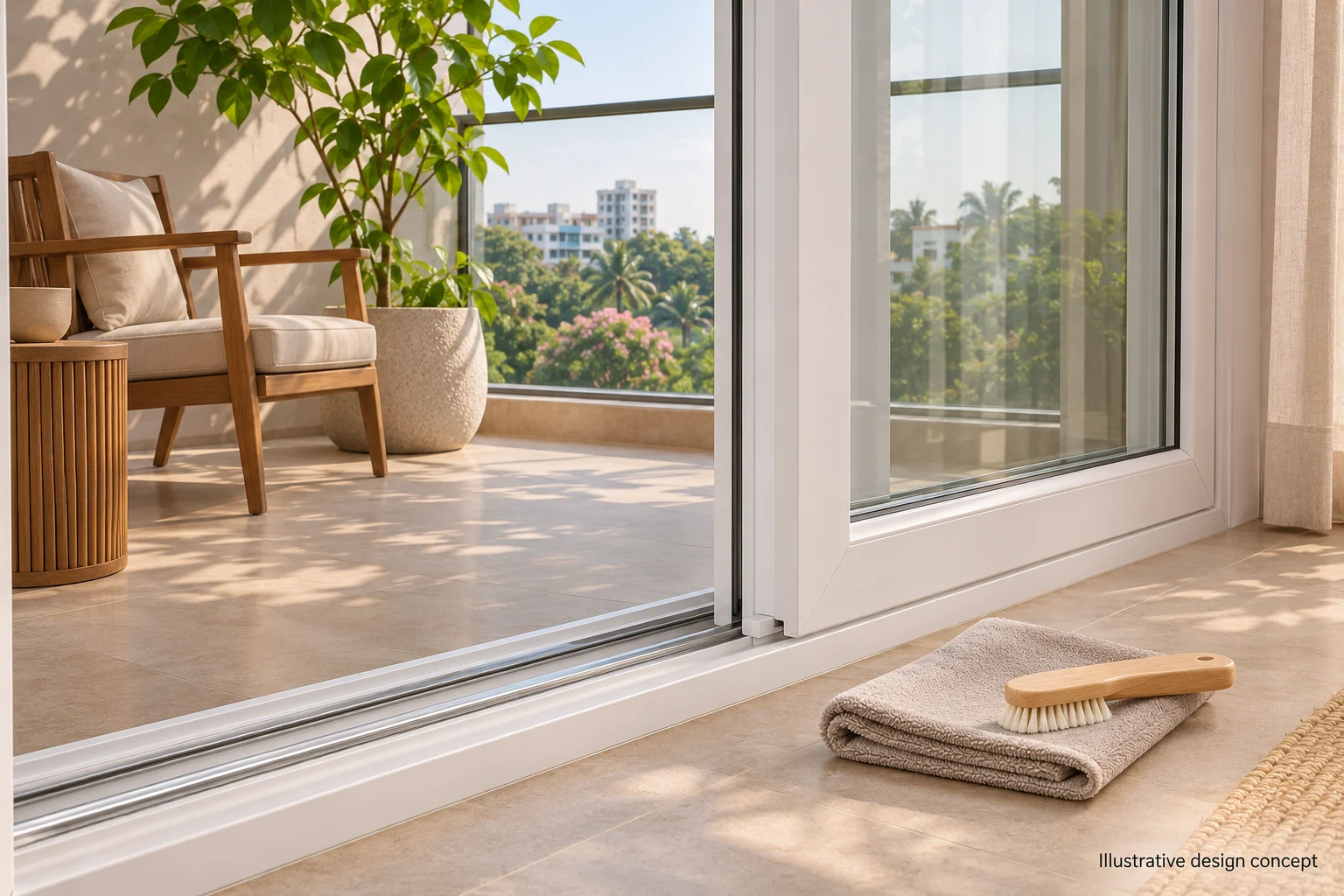
A balcony door should be comfortable to use every day. Dust from nearby construction, leaves, wet footwear and everyday household dirt can collect around its threshold. A simple care routine helps keep the running area clear and makes changes in operation easier to notice. This guide covers cleaning and observation for uPVC sliding doors, plus the information to share when a door needs professional attention.
Start with the symptom
Notice whether the door is difficult to slide throughout its travel, catches at one point, or moves freely but does not lock. These are different symptoms. A dirty track is something you can clean; a roller, alignment or locking problem needs assessment. Avoid repeatedly pushing a sticking panel harder. Note when the problem started and whether it followed building work, an impact or a change in operation.
How to clean a uPVC sliding-door track
- Move loose objects away from the doorway. Keep children and pets clear while cleaning, and leave the door in a stable position.
- Remove loose dust and leaves with a soft brush or a vacuum attachment. Work along the accessible running area without inserting sharp objects into gaps.
- Wipe accessible frame and track surfaces with a soft cloth and a mild soap solution. Use a damp cloth rather than flooding the threshold.
- Remove the soap residue with a clean damp cloth, then dry the accessible surfaces.
- Check that the door moves normally and that nothing has been left in the track. Stop if it still catches, scrapes or feels unstable.
Avoid abrasive pads, metal scrapers and strong solvents. Follow the care instructions for your specific finish, glass and hardware. Cleaning should not involve taking a glazed panel out of its frame.
Keep drainage openings clear
Some water-management channels are part of the frame design. Remove loose surface debris around accessible drainage outlets, without pushing dirt further inside or altering the opening. Do not drill additional holes or seal existing outlets to stop water appearing in a channel. If water reaches the room, record where and when it enters so the installation team can assess the frame, drainage and surrounding building details. Our balcony threshold and mesh guide explains why the doorway and surrounding floor levels should be planned together.
Check handles, locks and seals gently
Wipe handles and accessible hardware with a soft cloth. Look for a loose handle, damaged brush seal or a lock that no longer engages in its usual way. Do not force the handle or key. If the door slides normally but the lock does not line up, describe that exact behaviour when booking support. Moving the lock keep or changing roller height without identifying the system can create another problem.
There is no single lubricant instruction for every sliding-door component. Use only the product and application points specified for the installed hardware. Avoid spraying an unidentified oil across the track, brush seals and lock as a general remedy. Hardware servicing and adjustment belong with someone familiar with the system.
When a technician should inspect the door
- The panel scrapes, judders or repeatedly sticks after the accessible track has been cleaned.
- The handle is loose, the lock does not engage or the door cannot be secured normally.
- A seal has come away, a component appears damaged, or water is entering the room.
- The glass is damaged or the panel feels unstable. Keep people away and arrange professional assistance.
Do not lift out a heavy glazed panel or remove hardware to investigate. A service assessment can identify whether cleaning, adjustment, a component replacement or work to the surrounding opening is appropriate. A new door should not be assumed necessary from one symptom alone.
Make the service request useful
For an Astrapia installation, share the order or installation reference if available, city and area, door location, a short description of the symptom, and clear photographs of the affected area. A short video of the operating problem can help the team understand it; avoid forcing the panel for the recording. Tell us whether it is your main balcony access and whether the lock currently secures.
For Bengaluru projects, request a callback from our Bengaluru team. For an installation elsewhere, share your city and project details. Astrapia supplies and installs across India, with a 20-year warranty on white and coloured uPVC profiles, a 5-year hardware warranty and a lifetime service guarantee.
Choosing a new sliding door?
Plan daily access, the clear passage, panel arrangement, mesh, threshold and cleaning access before manufacture. Explore our uPVC door range and French versus sliding door comparison. The right arrangement should fit how you use the balcony, terrace or garden, as well as how the opening looks.
Frequently asked questions
Why is my uPVC sliding door hard to open?
Debris in the running area is one possible cause, but rollers, alignment or hardware may also need attention. Clean the accessible track first; if the problem remains, book an assessment rather than forcing the door.
How often should I clean the track?
Check it as part of normal household cleaning and after dusty building work or visible leaf accumulation. The right interval depends on exposure and how quickly dirt collects, rather than one fixed schedule for every home.
Should I adjust the rollers myself?
Arrange adjustment through a technician who knows the installed system. Panel weight, roller arrangement and locking alignment need to be considered together.